 中文服务
中文服务







 6 Clinics Across London
 600,000 Treatments
 Free Consultation
 Award Winning Treatments
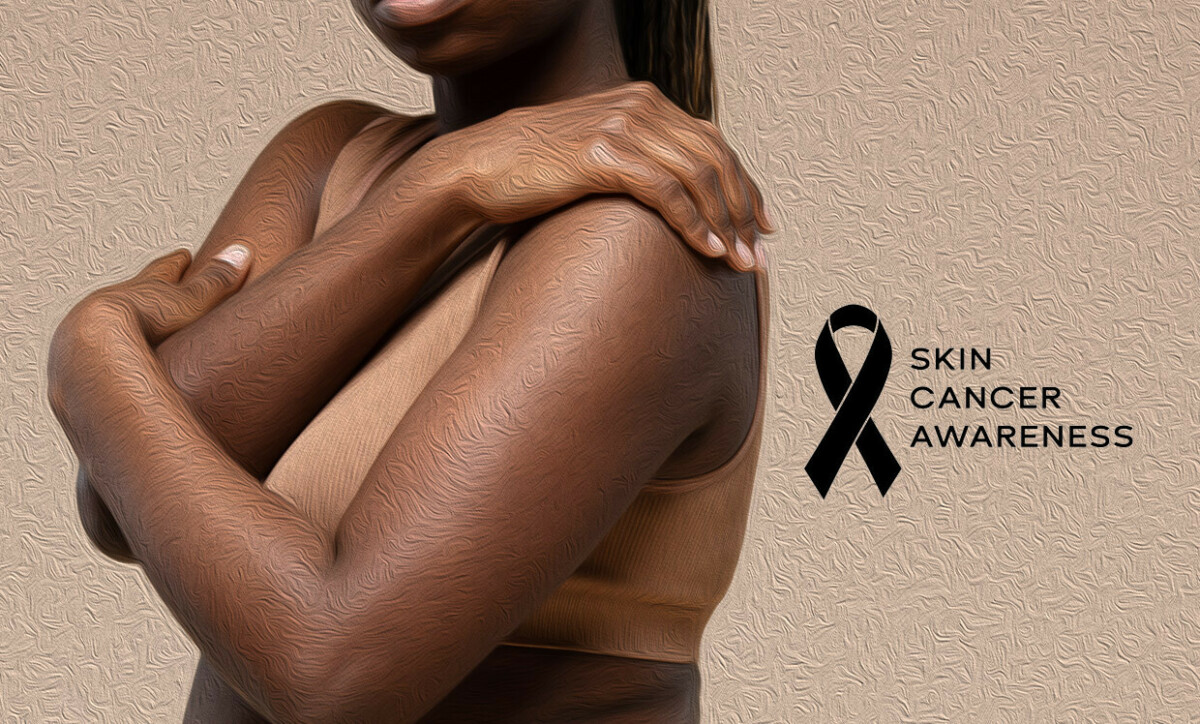
Skin cancer is often erroneously perceived as a disease predominantly affecting lighter-skinned individuals. This misconception can be perilous, as it may lead to delayed diagnosis and treatment in darker-skinned populations. Understanding the specific symptoms and manifestations of skin cancer in darker skin tones is essential for early detection and effective management.
Understanding Skin Cancer in Darker Skin
Melanin, the pigment responsible for darker skin tones, provides some degree of protection against ultraviolet (UV) radiation by absorbing and dissipating UV rays more effectively than lighter skin. However, this protection is not absolute. Studies have shown that skin cancer in darker-skinned individuals is often diagnosed at more advanced stages compared to lighter-skinned individuals, primarily due to a lack of awareness and delayed presentation to healthcare providers (Kivijärvi et al., 2020).
Common Types of Skin Cancer
The three most prevalent types of skin cancer are basal cell carcinoma (BCC), squamous cell carcinoma (SCC), and melanoma. Each type can present differently in darker skin tones, and recognising these variations is crucial.
- Basal Cell Carcinoma (BCC): BCC is the most common form of skin cancer, characterised by lesions that are typically pearly or waxy in appearance. In individuals with darker skin, BCC may present as dark brown or black lesions, which can be mistaken for benign moles or age spots (Bradford, 2009).
- Squamous Cell Carcinoma (SCC): SCC manifests as firm, red nodules or flat lesions with a scaly, crusted surface. In darker-skinned individuals, SCC often appears as rough, hyperpigmented patches or persistent sores that do not heal. These lesions are frequently located on sun-exposed areas, such as the face, ears, and hands (Gloster & Neal, 2006).
- Melanoma: Melanoma is the most lethal form of skin cancer. In darker skin tones, melanoma commonly occurs on non-sun-exposed areas such as the palms, soles, under the nails, and mucosal surfaces like the mouth. It often appears as a new dark spot or an existing mole that changes in colour, size, or shape (Rouhani et al., 2010).
Symptoms to Watch For
- New Growths or Changes: Vigilance for new growths or changes in the skin is critical. This includes moles, freckles, or dark patches that alter in size, shape, or colour. Any asymmetry, border irregularity, colour variation, diameter over 6mm, or evolution over time (ABCDE criteria) should prompt medical evaluation (American Academy of Dermatology, n.d.).
- Non-Healing Sores: Persistent sores or ulcers that fail to heal within a few weeks can be indicative of skin cancer. These may bleed intermittently and often occur in atypical locations for darker-skinned individuals (Cress & Holly, 1997).
- Pigmented Lesions: Dark spots or lesions that suddenly appear and grow should be examined. Melanomas in darker skin tones frequently develop in less sun-exposed areas, making regular full-body skin examinations essential (Byrd-Miles et al., 2007).
- Texture Changes: Changes in skin texture, such as becoming scaly, rough, or developing an irregular surface, should be assessed by a healthcare professional. Such changes can indicate malignancy (Rogers et al., 2010).
Prevention and Early Detection
Preventive measures, including the use of broad-spectrum sunscreen, wearing protective clothing, and avoiding peak sun hours, are important for all skin types. Regular self-examinations and annual dermatological check-ups are vital for early detection of skin cancer, particularly in darker-skinned individuals who may not exhibit typical symptoms (Bradford, 2009).
Heightened awareness of skin cancer symptoms in darker skin tones is crucial for early detection and treatment. Despite the protective effects of melanin, individuals with darker skin are not immune to skin cancer. Understanding and recognising the specific symptoms can lead to prompt medical intervention, thereby improving outcomes and reducing the risk of severe complications. Regular skin examinations and protective measures are essential strategies in mitigating the risk of this often-overlooked health threat.
References
- American Academy of Dermatology. (n.d.). “ABCDEs of Melanoma.” Retrieved from aad.org. (https://www.aad.org/public/diseases/skin-cancer/find/at-risk/abcdes)
- Bradford, P. T. (2009). “Skin Cancer in Skin of Color.” Dermatology Nursing, 21(4), 170-177. (https://www.ncbi.nlm.nih.gov/pmc/articles/PMC2757062/)
- Byrd-Miles, K., Toombs, B., & Peck, G. L. (2007). “Skin cancer in individuals of African, Asian, Latin-American, and American Indian descent: differences in incidence, clinical presentation, and survival.” Dermatologic Clinics, 25(3), 413-424. (https://www.ncbi.nlm.nih.gov/pmc/articles/PMC2923934/)
- Cress, R. D., & Holly, E. A. (1997). “Incidence of cutaneous melanoma among non-Hispanic Whites, Hispanics, Asians, and Blacks: an analysis of California cancer registry data, 1988-93.” Cancer Causes & Control, 8(2), 246-252. (https://pubmed.ncbi.nlm.nih.gov/9134249/)
- Gloster, H. M., & Neal, K. (2006). “Skin cancer in skin of color.” Journal of the American Academy of Dermatology, 55(5), 741-760. (https://pubmed.ncbi.nlm.nih.gov/17052479/)
- Kivijärvi, A., Nissinen, M., & Hemminki, K. (2020). “Delayed diagnosis of melanoma in non-white skin: a meta-analysis.” European Journal of Cancer, 130, 1-6.
- Rogers, H. W., Weinstock, M. A., Feldman, S. R., & Coldiron, B. M. (2010). “Incidence estimate of nonmelanoma skin cancer in the United States, 2006.” Archives of Dermatology, 146(3), 283-287. (https://jamanetwork.com/journals/jamadermatology/article-abstract/209782)
- Rouhani, P., Pinheiro, P. S., Sherman, R., & Wolfgang, C. (2010). “Melanoma outcomes among Hispanics in the first 5 years of follow-up: Florida, 1990-2004.” Cancer Epidemiology Biomarkers & Prevention, 19(11), 2920-2926.













 Back to All Treatments
 In Clinic Consultation
 Telephone Consultation