 中文服务
中文服务







 6 Clinics Across London
 600,000 Treatments
 Free Consultation
 Award Winning Treatments
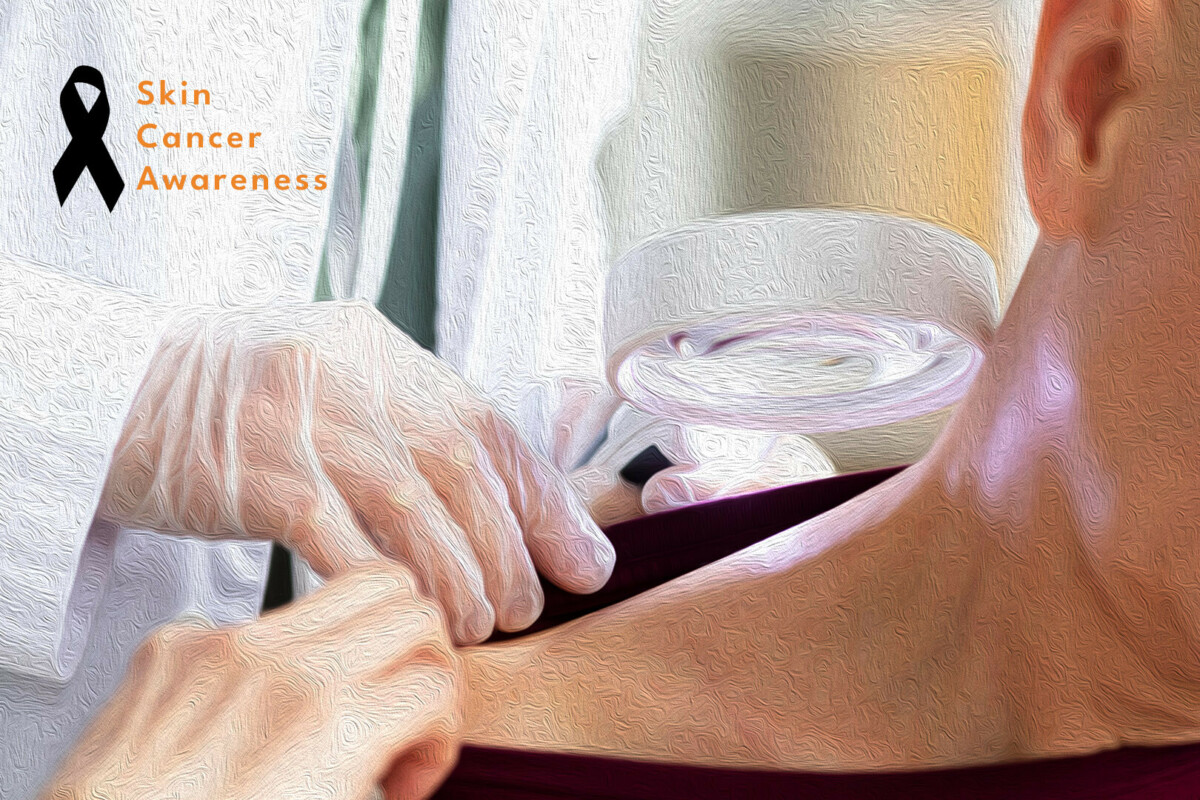
A Guide for Skin Cancer Awareness Month
Skin cancer, one of the most common types of cancer globally, often develops from prolonged exposure to ultraviolet (UV) radiation, primarily from sunlight and tanning beds (Cancer Research UK, 2021). As we mark Skin Cancer Awareness Month, it’s crucial to empower ourselves with knowledge about recognising signs of skin cancer. Early detection not only potentially saves lives but also significantly improves treatment outcomes.
1. Understanding the Types of Skin Cancer
Skin cancer is generally categorised into two main types: melanoma and non-melanoma. Non-melanoma cancers, which include basal cell carcinoma (BCC) and squamous cell carcinoma (SCC), are more prevalent but less aggressive than melanoma, which is known for its potential to spread rapidly to other parts of the body (NHS, 2022).
2. Key Signs and Symptoms
Melanoma
Melanoma is notorious for its ability to develop from existing moles or appear as new, unusual growths on the skin. The ABCDE rule provides a simple way to check moles for signs of melanoma (American Cancer Society, 2020):
- Asymmetry: One half of the mole does not match the other.
- Border: Edges are irregular, ragged, or blurred.
- Colour: Varies from one area to another, with shades of tan, brown, black, and sometimes white, red, or blue.
- Diameter: Typically larger than 6mm (although melanomas can be smaller).
- Evolving: Changes in size, shape, or colour over time.
Any noticeable changes in a mole’s appearance or the development of new symptoms such as itching or bleeding should prompt a consultation with a healthcare provider.
Non-Melanoma
Non-melanoma skin cancers often develop in areas frequently exposed to the sun following sun damage, such as the scalp, face, lips, ears, neck, chest, arms, and hands, and on the legs in women. Key symptoms include (Skin Cancer Foundation, 2021):
- Basal cell carcinoma (BCC) Appears as a change in the skin, such as a growth or a sore that won’t heal. It might look like a red patch, a shiny bump, or a pink growth.
- Squamous cell carcinoma (SCC) Often appears as a firm red nodule or a flat lesion with a scaly, crusted surface.
3. Prevention and Protection
Protecting your skin from UV radiation is a vital step in preventing skin cancer. Recommendations include (World Health Organization, 2022):
- Seeking shade, especially during midday hours.
- Wear protective clothing, such as hats, long-sleeved shirts, and sunglasses.
- Applying broad-spectrum sunscreen with an SPF of at least 30, even on cloudy days, and reapplying every two hours or after swimming or sweating.
- Avoid tanning beds and sunlamps, which can be as harmful as direct sunlight.
4. The Importance of Regular Skin Checks
Regular self-examinations and professional skin evaluations are crucial. Individuals are advised to perform a thorough self-exam of their skin every month and to see a dermatologist annually for a professional skin exam or more frequently if at high risk of skin cancer (British Association of Dermatologists, 2021).
As we observe Skin Cancer Awareness Month, let us commit to proactive skin health management. By recognising the early signs of skin cancer and taking preventative measures, we can significantly reduce our risk and ensure that any potential skin cancers are caught and treated early. Remember, early detection is key to effective treatment.
References
- American Cancer Society. (2020). Melanoma Skin Cancer Detection and Symptoms.
- British Association of Dermatologists. (2021). Guidance on Skin Cancer Detection.
- Cancer Research UK. (2021). Statistics on Skin Cancer.
- NHS. (2022). Overview of Skin Cancer.
- Skin Cancer Foundation. (2021). Symptoms of Non-Melanoma Skin Cancer.
- World Health Organization. (2022). Skin Cancer Prevention Guidelines.












 Back to All Treatments
 In Clinic Consultation
 Telephone Consultation